


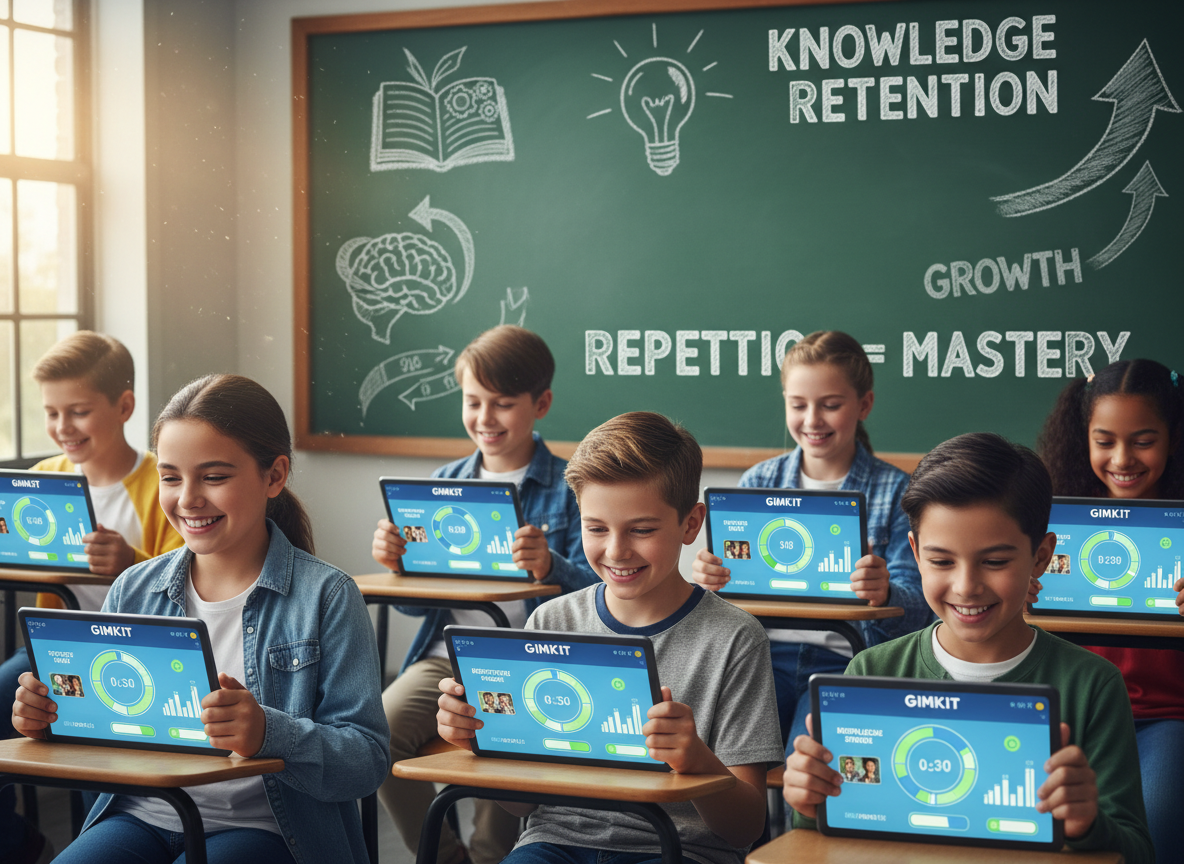
Classroom engagement can often feel like an uphill battle. Educators are constantly searching for innovative tools that not only capture students’ attention but also genuinely improve their learning outcomes. Gimkit, a dynamic game show platform for the classroom, has emerged as a powerful ally in this mission. By blending the excitement of gaming with proven educational principles, Gimkit helps students retain knowledge more effectively, primarily through the strategic use of repetition. This approach transforms learning from a passive chore into an active, engaging, and memorable experience.
The core of Gimkit’s success lies in its ability to make learning feel like play. This isn’t just about adding points and leaderboards to a quiz; it’s about fundamentally changing the learning dynamic. Instead of simply answering questions, students earn in-game currency, which they can then invest in upgrades and power-ups. This simple economic layer adds a strategic depth that keeps them hooked, encouraging them to answer more questions correctly to advance their game. This model turns review sessions and knowledge checks into exciting competitions, fostering a positive and energetic learning environment.
The Science of Spaced Repetition and Learning
To understand why Gimkit is so effective, we must first look at the science behind memory. Our brains are not designed to remember every piece of information we encounter. The “forgetting curve,” a concept first proposed by psychologist Hermann Ebbinghaus, illustrates how quickly we forget information if we don’t make a conscious effort to retain it. Without reinforcement, we can lose more than half of newly learned information within just one day.
The most effective way to combat the forgetting curve is through a technique called spaced repetition. This principle involves reviewing information at increasing intervals over time. Each time you revisit a concept just as you are about to forget it, you strengthen the neural pathways associated with that memory. This process makes the information easier to recall in the future and helps transfer it from short-term to long-term memory.
Gimkit cleverly integrates this proven learning science into its gameplay. When a student answers a question incorrectly, the platform doesn’t just move on. It reintroduces that same question later in the game. This immediate, built-in repetition ensures that students confront their knowledge gaps and are given another chance to master the concept within the same session. This cycle of answering, making mistakes, and trying again is a form of active recall that is far more effective than passively rereading notes.
Gimkit in Action: Live Games and Engaging Assignments
Gimkit offers educators two primary modes to facilitate learning: live games and asynchronous assignments. Each mode leverages repetition in a unique way to cater to different classroom needs.
The Energy of Live Games
Live Gimkit games are where the platform truly shines. An educator launches a game, and students join using a unique code on their own devices. What follows is a fast-paced, competitive, and highly engaging experience. Students race against the clock and each other to answer questions and earn virtual cash.
Here’s how repetition plays a key role in a live game:
- Continuous Exposure: During a 15 or 20-minute game, a student might see the same set of 20-30 questions multiple times. This continuous exposure reinforces the correct answers.
- Immediate Feedback: After each question, students receive instant feedback. If they are wrong, they see the correct answer, and Gimkit flags that question to reappear later. This ensures they don’t repeatedly make the same mistake without correction.
- Motivation to Improve: The desire to earn more cash and climb the leaderboard motivates students to pay closer attention to questions they previously answered incorrectly. The game incentivizes them to learn from their errors.
For example, in a history class reviewing key dates for the American Revolution, a student might initially struggle to remember the year the Treaty of Paris was signed. After getting it wrong, the question will pop up again a few minutes later. By the third or fourth time they see it, the correct answer is more likely to be ingrained in their memory, all thanks to the repetitive, game-based format.
Flexible Learning with Assignments
Beyond the live classroom setting, Gimkit’s assignment mode, known as “KitCollab” or standard homework, allows students to learn at their own pace. Educators can set a cash goal for students to reach, rather than a deadline. This shifts the focus from completion to mastery. To reach the goal, a student must answer a certain number of questions correctly.
This format provides a different but equally effective form of repetition:
- Mastery-Based Learning: Students cannot finish the assignment until they have demonstrated a sufficient level of understanding. They must keep answering questions, including ones they got wrong before, until they reach the target.
- Low-Stakes Practice: The assignment mode removes the time pressure of a live game. This allows students to think more deeply about the questions and use their notes or other resources to find the correct answers, reinforcing the learning process.
- Personalized Repetition: Students who master the content quickly can finish faster. Those who struggle will naturally spend more time with the material, receiving the extra repetition they need to build confidence and retain the information.
An assignment on vocabulary words for a foreign language class is a perfect use case. A student might need to earn $1,000 in the game. Each correct answer might earn them $50. If they answer incorrectly, they lose money and will see that word again. This forces them to engage with the material until they achieve the required level of proficiency.
Beyond Repetition: The Broader Benefits of Gimkit
While repetition is at the heart of Gimkit’s effectiveness for knowledge retention, the platform’s benefits extend much further. The engaging format helps build a positive classroom culture where students are excited to learn and review material.
One of Gimkit’s most popular features is its variety of game modes. From “Trust No One,” which adds a social deduction element similar to the popular game Among Us, to “The Floor is Lava,” where teams must answer questions to build their way to safety, these modes keep the experience fresh. This variety prevents the repetition from becoming monotonous and ensures that students remain engaged session after session.
Furthermore, the platform empowers educators with valuable data. After each game, teachers can access detailed reports that show class-wide and individual student performance. This allows them to quickly identify concepts the entire class is struggling with or pinpoint students who may need extra support. This data-driven insight helps teachers tailor their instruction more effectively, addressing knowledge gaps before they become significant problems.
The Future of Learning is Engaging
Tools like Gimkit represent a significant shift in modern education. They demonstrate that learning does not have to be a passive or dull experience. By harnessing the elements that make games so compelling—strategy, competition, and rewards—we can create educational experiences that are not only fun but also highly effective. The strategic use of repetition within this engaging framework is a key reason for its success in helping students build lasting knowledge.
In the end, the goal of education is not just to present information but to ensure students can retain and apply it. Gimkit provides a powerful, practical, and enjoyable way to achieve this. By turning the often-tedious process of review and repetition into an exciting game, it captures students’ attention, motivates them to master content, and ultimately helps them remember what they’ve learned long after the game is over.
