


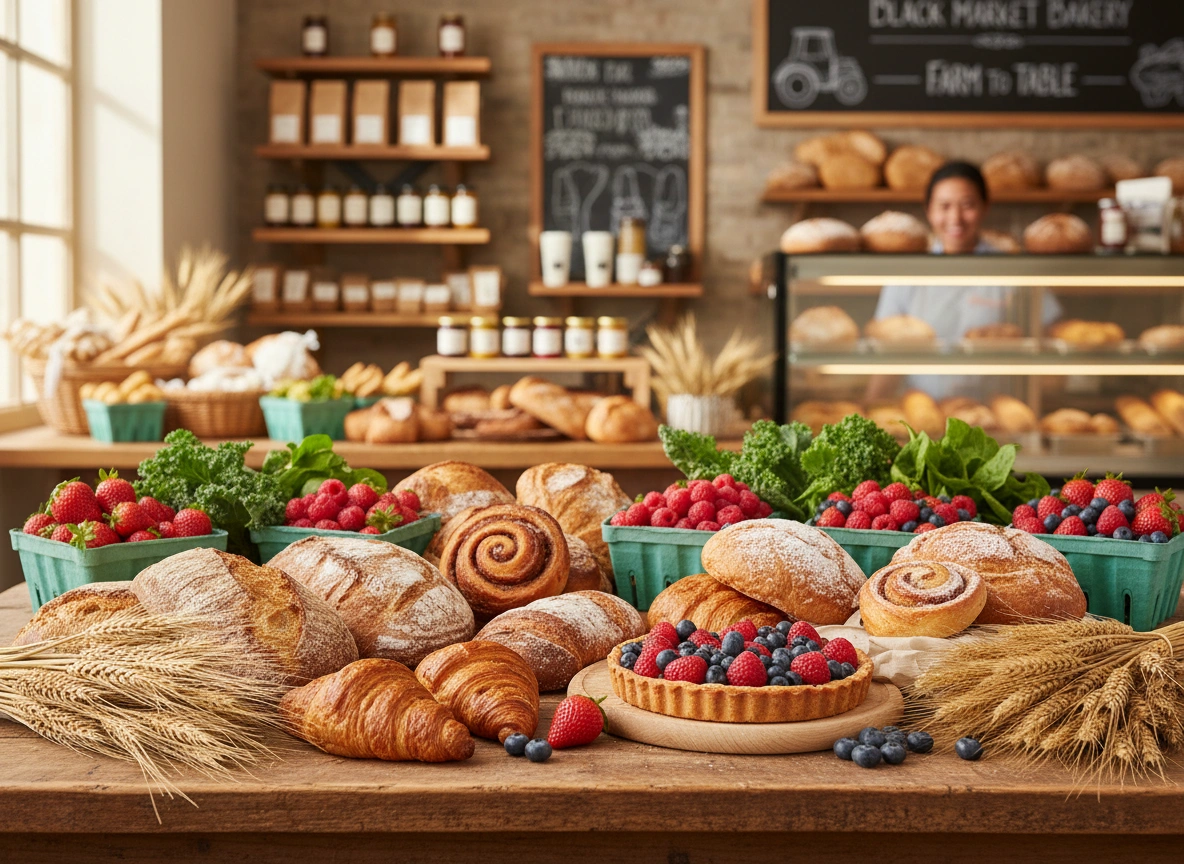
There is a distinct difference between a pastry that tastes “fine” and one that stops you in your tracks. Often, that secret ingredient isn’t a complex technique or a rare spice imported from halfway across the globe. It is the freshness of a strawberry picked yesterday just a few miles down the road, or the richness of butter churned by a dairy farmer who knows their herd by name.
For Black Market Bakery, the philosophy of “scratch-made” goes deeper than just mixing flour and sugar in-house. It extends to the very roots of their supply chain. By prioritizing relationships with local farmers and producers, they have built a business model that delivers superior flavor while strengthening the local economy. This article explores how Black Market Bakery supports local agriculture, the tangible benefits of this approach, and why sustainable sourcing is becoming a non-negotiable standard for modern food businesses.
Key Takeaways
- Flavor First: Why local ingredients consistently outperform industrial alternatives in taste and texture.
- Economic Impact: How buying local keeps money circulating within the community.
- Sustainability: The environmental benefits of reducing food miles.
- The Black Market Bakery Approach: Specific ways the bakery integrates local partnerships into its daily operations.
The “Soil to Scone” Philosophy
To understand why Black Market Bakery invests so heavily in local sourcing, you first have to understand the limitations of the industrial food system. When a bakery relies on broad-line distributors for everything, they often receive produce that was harvested weeks ago, treated with preservatives to survive shipping, and ripened artificially in a truck.
Black Market Bakery takes a different path. Their commitment to “soil to scone” sourcing means they look for ingredients that have spent more time in the ground and less time in transit. This isn’t just marketing fluff; it is a culinary strategy.
Why Freshness Equals Flavor
When fruits and vegetables are allowed to ripen fully on the vine or tree, they develop complex sugars and aromatics that are impossible to replicate artificially. A peach sourced from a local orchard in July will be bursting with juice and sweetness, whereas a peach shipped internationally in December is often mealy and bland.
By pivoting their menu based on what is currently thriving in local fields, Black Market Bakery ensures that every tart, cookie, and loaf of bread is working with the best possible raw materials. This creates a noticeable difference in the final product. The butter is creamier, the eggs have richer yolks, and the seasonal fruit galettes offer a genuine taste of the region’s harvest.
Building Resilient Local Economies
Supporting local farmers is about more than just great-tasting food; it is a vital economic engine. When a business like Black Market Bakery spends a dollar with a local flour mill or dairy, that money tends to stay in the community. It pays the farmer’s mortgage, supports local equipment suppliers, and funds the wages of farmhands who also live and shop nearby.
The Multiplier Effect
Economists call this the “local multiplier effect.” Studies suggest that for every $100 spent at a locally owned business, roughly $68 stays in the local economy. Compare that to spending the same amount at a national chain, where only about $43 remains local.
By acting as a reliable, high-volume buyer for small producers, Black Market Bakery provides the financial stability these farms need to plan for the future. Small-scale farming is a risky business, subject to the whims of weather and fluctuating commodity prices. having a consistent partner who values quality over the absolute lowest price allows these producers to invest in better equipment, sustainable practices, and fair labor.
Environmental Stewardship and Reduced Food Miles
In an era where climate change is a pressing concern for both businesses and consumers, the logistics of food transport have come under scrutiny. The average meal in the United States travels about 1,500 miles from farm to plate. This journey requires massive amounts of fossil fuels, refrigeration, and packaging.
Cutting Carbon Footprints
Black Market Bakery’s emphasis on local sourcing drastically reduces these “food miles.” Sourcing honey from a nearby apiary or berries from a regional farm means ingredients might travel 50 miles instead of 2,000.
This approach creates a lighter environmental footprint in several ways:
- Lower Emissions: Less fuel is burned for transport.
- Less Packaging: Local deliveries often use reusable crates rather than single-use plastic and heavy cardboard necessary for long-haul shipping.
- Preserving Green Space: By making local farming profitable, the bakery helps prevent agricultural land from being sold off for development or urban sprawl.
Navigating the Challenges of Local Sourcing
While the benefits are clear, operating a bakery based on local ingredients is not the easy path. It requires flexibility, creativity, and a willingness to accept that not everything is available all the time.
The Challenge of Seasonality
If you walk into a standard supermarket, you expect to see strawberries in January. At a bakery committed to local sourcing, the menu must change with the seasons. Black Market Bakery embraces this constraint as a source of creativity.
When citrus season ends, the lemon tarts might make way for stone fruit pastries. When the berry harvest is over, apples and pumpkins take center stage. This seasonality educates customers about the natural rhythms of agriculture. It builds anticipation—people look forward to “pumpkin season” or “strawberry season” because they know the flavors will be authentic, not forced.
Cost and Logistics
Local ingredients often cost more than mass-produced commodities. Small farmers don’t have the economies of scale that massive agribusinesses do. Furthermore, managing relationships with ten different small suppliers is more administratively complex than ordering everything from one giant distributor.
Black Market Bakery absorbs these complexities because they view the higher cost not as an expense, but as an investment in quality and community. They bet on the fact that their customers can taste the difference and are willing to support a business that aligns with their values.
Aligning with the Ethical Consumer
Today’s consumers are more informed and conscientious than ever before. They aren’t just buying a croissant; they are buying the story behind it. They want to know that the eggs came from cage-free chickens and that the wheat wasn’t drenched in harmful pesticides.
Transparency and Trust
Black Market Bakery builds trust by being transparent about their partners. Highlighting specific farms on their menu or social media channels does two things: it validates their claims of local support, and it gives credit to the hard-working producers behind the ingredients.
This transparency fosters a deeper connection between the customer and their food. When you eat a sandwich at Black Market Bakery, you aren’t just fueling up; you are participating in a local food system that values animal welfare, fair wages, and environmental health.
The Future of Bakery Sourcing
The model adopted by Black Market Bakery is indicative of a larger shift in the culinary world. We are moving away from the era of “everything, everywhere, all at once” and returning to regionality.
A Model for Others
Black Market Bakery serves as a case study for other food businesses. They prove that you can scale a bakery without sacrificing your soul or your standards. They demonstrate that profitability and principles are not mutually exclusive.
As supply chains become more volatile globally—disrupted by pandemics, geopolitical conflict, and climate events—local supply chains offer resilience. A bakery that relies on a neighbor for flour is less likely to be derailed by a shipping container shortage across the ocean.
Conclusion
Black Market Bakery’s commitment to local farmers and producers is a testament to the power of conscious business. They have successfully woven themselves into the fabric of their local agricultural community, creating a symbiotic relationship where everyone thrives.
For the customer, this results in baked goods that are fresher, tastier, and more ethically sound. For the farmer, it means a reliable partner and financial security. And for the community, it means a robust local economy and a healthier environment.
Next time you visit Black Market Bakery, take a moment to appreciate the journey of the food on your plate. That slice of bread or that fruit tart represents a network of local hands working together to create something special.
Actionable Next Steps
- Ask Questions: When visiting bakeries or restaurants, ask where they source their ingredients. Expressing interest encourages businesses to buy local.
- Shop Seasonal: Try to align your own grocery shopping with the seasons. Visit your local farmers’ market to understand what is currently harvesting in your region.
- Support the Supporters: Choose to spend your money at establishments like Black Market Bakery that actively invest in the local supply chain. Your dollar is a vote for the kind of food system you want to see.
Please visit website for more info.
